
In Scavland, you can find many materials in loot, but that doesn’t mean you have to store them permanently in your backpack. Some materials are used for crafting equipment, making medicine, and repairing weapons and armor.
The problem is that you can’t easily remember which items are actually useful and how you can craft items from them. This Scavland crafting recipes guide lists the known recipes and the exact materials required for each one.
How Crafting Works in Scavland
Crafting is connected to the game’s looting and survival systems. You collect different materials while exploring and can use them for useful items, repairs, and medical supplies.
This also helps you to manage your inventory, as you can convert ten items into a single item. Instead of carrying every piece of junk with you, you can use them in crafting recipes.
For example, you need Plastic scrap, Chemical waste, and Worm skin to craft Glue. You can then use the same Glue to craft many other equipment items.
Some recipes also have an alternative material combination. I’ve listed both versions below so you can use whichever resources you have available.
Note: The crafting system is still being worked on, and players have also reported missing quality-of-life features around storage and crafting. Recipe requirements may change with future updates.
Scavland Equipment Crafting Recipes
Glue

- Plastic scrap ×1
- Chemical waste ×1
- Worm skin ×1
Field Repair Kit (Threads)

Recipe 1:
- Scrap of fabric ×2
- Scrap metal ×2
- Glue ×1
Alternative recipe:
- Scrap of fabric ×2
- Scrap metal ×2
- Plastic scrap ×1
- Chemical waste ×1
- Worm skin ×1
The alternative recipe basically replaces the Glue with the materials needed to make it.
Sewing Kit

Recipe 1:
- Scrap metal ×2
- Field kit ×1
- Glue ×1
Alternative recipe:
- Scrap metal ×4
- Scrap of fabric ×2
- Plastic scrap ×2
- Chemical waste ×2
- Worm skin ×2
If you already have a Field kit and Glue, make sure to use the first recipe as it uses fewer raw materials.
Repair of Worn Armor

Recipe 1:
- Sewing kit ×1
- Glue ×1
- Pliers ×1
Alternative recipe:
- Scrap metal ×4
- Scrap of fabric ×2
- Plastic scrap ×3
- Chemical waste ×3
- Worm skin ×3
- Pliers ×1
You’ll need Pliers for both versions, so don’t sell them if you’re planning to repair armor.
Scavenger Armor Repair

Recipe 1:
- Repair of worn armor ×1
- Field kit ×1
- Pliers ×1
Alternative recipe:
- Scrap metal ×6
- Scrap of fabric ×4
- Plastic scrap ×4
- Chemical waste ×4
- Worm skin ×4
- Pliers ×2
Scavland Medicine Crafting Recipes
Moonshine

- Flask ×1
- Chemical waste ×1
- Overripe potato ×1
Bandage

- Scrap of fabric ×4
- Moonshine ×1
Morphine

- Scrap metal ×1
- Plastic scrap ×1
- Medicinal herb ×1
First Aid Kit AI-2

Recipe 1:
- Plastic scrap ×2
- Chemical waste ×2
- Morphine ×1
Alternative recipe:
- Plastic scrap ×3
- Chemical waste ×2
- Scrap metal ×1
- Medicinal herb ×1
Scavland Weapon Crafting and Repair Recipes
Gun Lubricant

- Plastic scrap ×1
- Chemical waste ×1
- WG-40 ×1
Cleaning Rod

- Scrap metal ×2
- Scrap of fabric ×2
Field Tools for Weapons

Recipe 1:
- Cleaning rod ×1
- Screwdriver ×1
- Hammer ×1
Alternative recipe:
- Scrap metal ×2
- Scrap of fabric ×2
- Screwdriver ×1
- Hammer ×1
Repair of Weapons from Scrap Metal

Recipe 1:
- Scrap metal ×1
- Field instruments ×1
- Hammer ×1
Alternative recipe:
- Scrap metal ×3
- Scrap of fabric ×2
- Screwdriver ×1
- Hammer ×2
Basic Repair Kit

Recipe 1:
- Scrap metal weapon repair ×1
- Mechanical components ×1
- Screwdriver ×1
Alternative recipe:
- Scrap metal ×3
- Scrap of fabric ×2
- Screwdriver ×2
- Hammer ×2
- Mechanical components ×1
Which Items Should You Keep?
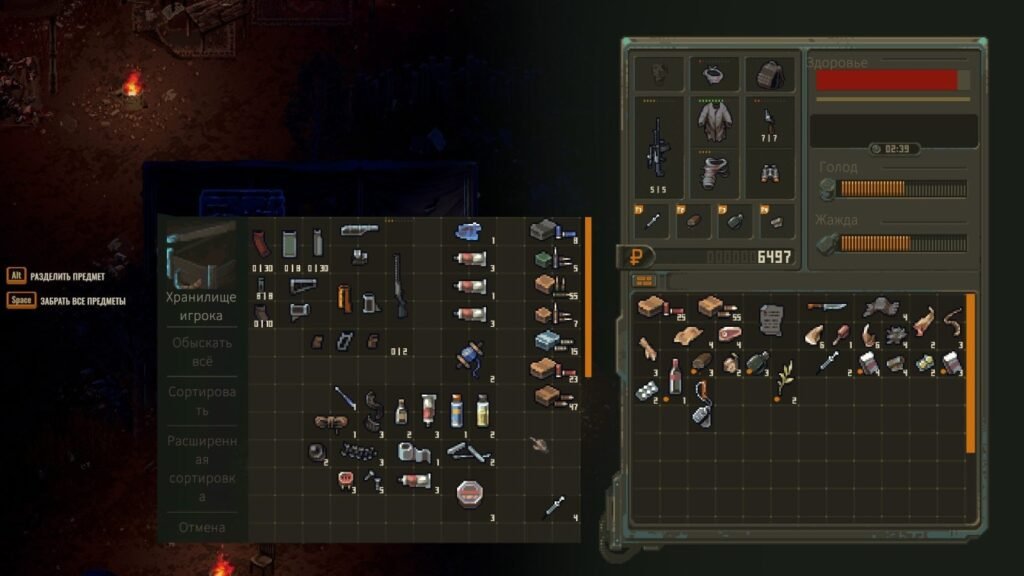
If you want to manage your inventory and craft items, these are materials that you should always keep in your backpack:
- Scrap metal
- Scrap of fabric
- Plastic scrap
- Chemical waste
- Worm skin
- Medicinal herb
- Overripe potato
- Flask
- Glue
- Mechanical components
- WG-40
- Pliers
- Screwdriver
- Hammer
You don’t necessarily have to carry all of these during every run. Your backpack space is limited, so keep useful crafting materials in your stash when you don’t need them.
Also, the loot respawn mechanism in the game can make certain crafting materials easier to find than expected. That means you don’t always need to hoard huge amounts of everything.
Crafting and Storage Issues
Crafting can be a bit annoying when the materials you need are sitting in your stash instead of your backpack.
A few players have asked for crafting stations to use items directly from the storage chest at camp. The developers have said this feature is being worked on and should come in a future update.
Players have also asked for better stash sorting and easier ways to move and manage all the loot. With so many different items in Scavland, these small changes would make crafting and inventory management much easier.